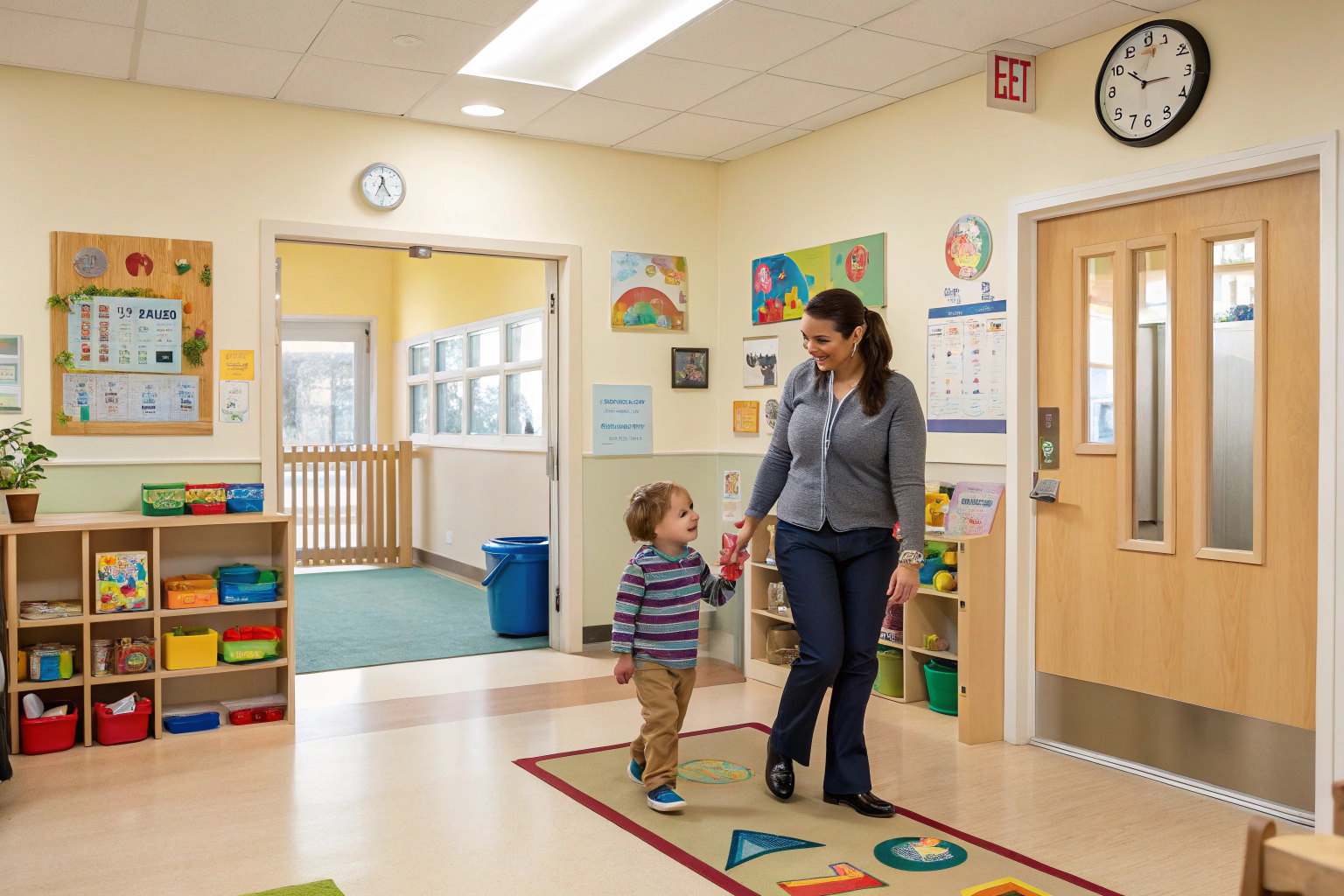
The right questions to ask daycare providers are crucial for evaluating their safety, policies, and overall environment. This prepared list helps parents and guardians gather essential information about licensing, staff qualifications, daily routines, and communication methods. Asking detailed questions ensures you can confidently compare centers, identify potential red flags, and find a nurturing setting that aligns with your family’s values and your child’s needs, preventing future issues and giving you peace of mind.
Key Benefits at a Glance
- Verify Safety & Licensing: Confirm the center is licensed, insured, and follows all state-mandated safety protocols, including background checks for all staff.
- Understand Daily Routines: Learn about the daily schedule for activities, meals, naps, and outdoor play to ensure it fits your child’s needs.
- Assess Staff Qualifications: Inquire about teacher-to-child ratios, staff turnover rates, and certifications in early childhood education and CPR/first aid.
- Clarify Critical Policies: Get clear answers on policies regarding illness, discipline, emergency procedures, and parent communication.
- Uncover All Costs: Ask about tuition rates, late pickup fees, and any extra charges for meals, supplies, or special activities to avoid budget surprises.
Purpose of this guide
This guide is designed for parents and guardians navigating the challenging process of selecting a daycare. It solves the problem of not knowing what to look for or what to ask during a tour or interview. By using a structured list of questions, you will learn how to systematically evaluate each facility’s safety standards, educational philosophy, and overall environment. This approach helps you avoid common mistakes, such as overlooking high staff turnover or hidden fees, enabling you to make a well-informed decision and secure a safe, supportive setting for your child.
Questions to Ask Daycare: The Essential Guide for Confident Parents
Choosing the right daycare for your child ranks among the most emotionally charged decisions parents face. The weight of entrusting your precious little one to strangers can feel overwhelming, especially when you’re bombarded with marketing materials that all promise exceptional care. As someone who has guided countless families through this process, I understand that beneath the anxiety lies a fundamental need for confidence in your choice.
The key to transforming this stressful decision into an empowering evaluation process lies in preparation. This comprehensive guide addresses every critical aspect of daycare evaluation, from licensing status and safety measures to curriculum approaches and staff qualifications. By the end of this article, you’ll possess a structured framework for assessing facilities that goes far beyond surface-level impressions, ensuring you make an informed decision that aligns with both your practical needs and parental peace of mind.
Why Preparing Questions Before Your Daycare Tour Matters
I’ll never forget the call from Sarah, a first-time mom who had just enrolled her daughter in what seemed like the perfect daycare. “The lobby was beautiful,” she told me, “and the director was so friendly during our tour.” Three weeks later, she discovered that the facility was operating with expired licensing, staff turnover was over 80% annually, and there were no documented emergency procedures. Sarah’s experience illustrates a critical truth: unprepared tours often lead to decisions based on superficial factors rather than substantive quality indicators.
When you walk into a daycare facility without a strategic question list, you’re essentially conducting a passive observation rather than an active evaluation. The warm lighting, cheerful wall decorations, and enthusiastic director can create an emotional response that overshadows fundamental concerns about safety protocols, staff qualifications, and educational philosophy. This is particularly problematic because daycare facilities naturally put their best foot forward during scheduled tours, potentially masking operational challenges that become apparent only through targeted questioning.
- Prevents decision-making based on superficial factors like attractive décor
- Ensures comprehensive evaluation of all critical safety and quality indicators
- Transforms passive facility tours into active assessment opportunities
- Helps identify red flags that unprepared parents often miss
- Creates structured dialogue with staff to reveal true facility culture
Preparation transforms your tour from a marketing presentation into a meaningful dialogue about practices, policies, and philosophy. When you arrive with thoughtful questions, you signal to staff that you’re a discerning parent who values transparency. This often elicits more honest, detailed responses than general inquiries about “how things work here.” Moreover, prepared questions help you maintain focus during what can be an emotionally overwhelming experience, ensuring you gather the information needed for a rational decision.
How to Prioritize Your Questions Based on Family Values
Not all families share identical priorities when evaluating childcare options. Some parents prioritize educational enrichment and structured learning activities, while others value flexibility and emotional nurturing above academic preparation. Understanding your family’s core values before beginning your search helps you customize your question priorities and evaluation criteria accordingly.
Consider the Martinez family, who valued bilingual education and cultural diversity above all other factors. Their priority questions focused on staff language capabilities, multicultural curriculum elements, and celebration of different traditions. In contrast, the Johnsons, both working demanding corporate jobs, prioritized operational reliability: extended hours, minimal closure days, and clear sick child policies. Both families found excellent daycare options, but their different value systems led them to very different facilities.
To identify your priorities, start by discussing these key areas with your partner: educational approach preferences, scheduling flexibility needs, budget constraints, special accommodation requirements, and communication style preferences. Once you’ve identified your top three to five priorities, you can structure your questions to thoroughly investigate these areas while still covering universal safety and quality concerns.
For families prioritizing educational approach, focus questions on curriculum philosophy, teacher qualifications, assessment methods, and developmental milestone tracking. If scheduling flexibility matters most, concentrate on policies regarding late pickup, early drop-off, holiday closures, and sick day accommodations. Budget-conscious families should dig deep into fee structures, payment schedules, additional costs, and available financial assistance programs.
Top 10 Must Ask Questions for Every Daycare Tour
Regardless of your individual family priorities, certain questions remain non-negotiable for every daycare evaluation. These universal inquiries address fundamental safety, legal, and quality standards that protect all children, transcending personal preferences about educational philosophy or operational convenience.
- What is your current licensing status and when was your last inspection?
- What are your staff-to-child ratios for each age group?
- What background checks and certifications do all staff members have?
- What are your emergency procedures for fire, severe weather, and lockdowns?
- How do you handle sick children and what are your illness exclusion policies?
- What is your discipline and behavior guidance philosophy?
- How do you communicate with parents about daily activities and concerns?
- What is your complete fee structure including all additional costs?
- What is your staff turnover rate and average tenure?
- Can you provide references from current families?
These questions serve as quality indicators because they reveal how well a facility meets professional standards endorsed by organizations like the American Academy of Pediatrics and the National Association for the Education of Young Children. A quality daycare should be able to answer each question promptly and thoroughly, often providing documentation to support their responses. Hesitation, vague answers, or defensive reactions to these basic inquiries signal potential concerns that warrant deeper investigation.
The licensing question, for example, isn’t just about legal compliance—it reveals whether the facility values transparency and maintains current safety standards. Similarly, asking about staff turnover rates helps identify whether the center creates a stable, supportive environment for both employees and children. High turnover often indicates systemic issues with management, compensation, or working conditions that ultimately impact care quality.
Essential Safety and Health Questions
During my years evaluating childcare facilities, I’ve learned that safety concerns often hide behind polished presentations and friendly staff interactions. The most concerning safety violation I ever encountered was at a facility that had won local “Best Daycare” awards. Their beautiful playground equipment masked the fact that emergency exits were blocked by storage, staff weren’t trained in evacuation procedures, and medication administration lacked proper documentation protocols.
Safety evaluation requires examining both visible elements and documented procedures. Physical safety encompasses building security, playground equipment maintenance, hazard identification, and supervision protocols. Procedural safety involves emergency preparedness, staff training, incident reporting, and health policy implementation. The most effective safety questions reveal not just what policies exist, but how thoroughly they’re understood and implemented by all staff members.
| Safety Area | Key Questions | Red Flags |
|---|---|---|
| Building Security | How is building access controlled? Who has keys? | Unlocked doors, no visitor check-in system |
| Supervision | How do you maintain constant supervision during transitions? | Children left unattended, unclear supervision protocols |
| Emergency Plans | How often do you practice fire drills? What’s your lockdown procedure? | No documented plans, staff unfamiliar with procedures |
| Accident Response | What’s your process for handling injuries? How quickly do you notify parents? | No first aid supplies visible, unclear injury protocols |
When evaluating safety protocols, pay attention to how staff respond to your questions. Quality facilities typically welcome safety inquiries and provide detailed, confident answers. They may even volunteer to show you emergency supplies, evacuation routes, or safety equipment. Conversely, facilities with inadequate safety measures often provide vague responses, defer to absent administrators, or seem uncomfortable with detailed safety discussions.
Licensing verification deserves special attention because it confirms that the facility meets minimum state standards for safety, health, and operational requirements. Ask to see the current license displayed prominently, and don’t hesitate to verify the license status independently through your state’s licensing agency website. Recent violations or pending investigations should prompt serious consideration about whether to continue your evaluation process.
Emergency Procedures and Illness Policies
Emergency preparedness reveals a facility’s professionalism and commitment to child safety more clearly than almost any other factor. Well-prepared centers maintain detailed, written emergency procedures for various scenarios, conduct regular drills with staff and children, and ensure all employees can implement procedures confidently even under stress.
Fire safety procedures should include specific evacuation routes from each classroom, designated meeting areas away from the building, methods for accounting for all children and staff, and protocols for notifying emergency services and parents. Severe weather procedures must address shelter locations, communication with parents during emergencies, and provisions for extended shelter periods if necessary. Lockdown procedures, while difficult to discuss, are increasingly important and should demonstrate clear protocols for securing the building and keeping children safe during external threats.
- Vague or non-existent emergency procedures documentation
- Staff unable to explain evacuation routes or meeting points
- No clear illness exclusion criteria or inconsistent enforcement
- Delayed parent notification policies for injuries or emergencies
- Missing or expired first aid supplies and emergency contact information
Illness policies require particular scrutiny because they directly impact both your child’s health and your work schedule. Effective illness policies balance protecting the group from contagious diseases with reasonable accommodation for minor ailments. Ask specifically about fever policies, exclusion criteria for common childhood illnesses, requirements for doctor’s clearance to return, and procedures for children who become ill during the day.
The quality of illness policy implementation often becomes apparent through specific scenarios. Ask what happens if a child develops a fever of 101°F at 2 PM—how quickly are parents notified, where is the child isolated, who provides supervision, and what documentation is maintained? These details reveal whether policies exist merely on paper or are thoughtfully implemented in practice.
COVID 19 Policies and Infection Control
The pandemic fundamentally changed childcare health protocols, with many improvements likely to remain permanent fixtures of quality programs. Effective infection control now extends far beyond basic handwashing to encompass enhanced cleaning procedures, improved ventilation systems, health screening protocols, and flexible policies for children with minor symptoms that previously wouldn’t have warranted exclusion.
Enhanced cleaning protocols should specify frequency of disinfection for high-touch surfaces, toys, and common areas. Many quality facilities now clean and disinfect toys multiple times daily, maintain separate toy sets for rotation during cleaning cycles, and use EPA-approved disinfectants safe for children’s environments. Handwashing practices should include structured times throughout the day, proper technique instruction for children, and adequate supplies of soap and paper towels.
Ventilation improvements, while less visible, significantly impact infection control effectiveness. Ask about air filtration systems, frequency of HVAC maintenance, and policies for outdoor time to ensure adequate fresh air circulation. Some facilities have invested in air purification systems or made structural modifications to improve airflow—investments that demonstrate serious commitment to health protection.
Health screening procedures reveal how seriously a facility takes illness prevention. Daily health checks should include temperature screening, symptom questionnaires, and visual assessment of children’s wellness upon arrival. Staff should also undergo daily health screening to prevent adult-to-child transmission of illnesses. Clear protocols for handling children who develop symptoms during the day, including isolation procedures and parent notification timelines, indicate thorough preparation for illness management.
Staff Qualifications and Training Questions
Staff quality represents the single most important factor in determining your child’s daycare experience. Highly qualified, well-trained, stable staff create nurturing environments where children thrive developmentally, while inadequately prepared or frequently changing staff can negatively impact even the most well-equipped facilities. Understanding how to evaluate staff qualifications goes beyond reviewing credentials to assessing ongoing training, professional development opportunities, and job satisfaction indicators.
Understand how caregivers are trained to build secure attachments—critical during early development: When Does It Get Easier With a Baby.
Educational backgrounds vary significantly among childcare providers, from high school diplomas to advanced degrees in early childhood education. While formal education doesn’t guarantee quality interactions with children, it does indicate foundational knowledge about child development, age-appropriate activities, and professional practices. Look for staff with Child Development Associate (CDA) credentials, associate or bachelor’s degrees in early childhood education, or equivalent professional training programs.
Background check requirements should be comprehensive and current for all staff members who have contact with children. This includes criminal background checks, child abuse registry checks, and reference verification from previous employers. Quality facilities typically exceed minimum state requirements and may conduct periodic re-screening of long-term employees. Don’t hesitate to ask about the specific types of background checks conducted and how recently they were completed.
First aid and CPR certifications represent critical safety qualifications that all childcare staff should maintain. These certifications should be current, appropriate for the age groups served (infant/child CPR differs from adult CPR), and renewed according to certification requirements. Some facilities go beyond basic requirements to ensure multiple staff members in each classroom maintain these certifications, providing additional safety redundancy.
Professional development opportunities indicate whether a facility invests in staff growth and stays current with best practices in early childhood education. Quality centers typically provide ongoing training in areas like child development, behavior guidance, curriculum implementation, and health and safety protocols. Ask about training requirements, whether the facility provides paid time for professional development, and how new research and best practices are incorporated into daily operations.
Staff to Child Ratios and Supervision Practices
Staff-to-child ratios directly impact the quality of care and attention your child receives throughout the day. Lower ratios allow for more individualized attention, better supervision during activities, and more responsive caregiving when children need comfort or assistance. However, ratios alone don’t tell the complete story—how facilities maintain these ratios during staff breaks, illnesses, and transitions reveals their true commitment to adequate supervision.
| Age Group | NAEYC Recommended Ratio | Typical State Minimum | Group Size Limit |
|---|---|---|---|
| Infants (6-15 months) | 1:3 | 1:4 | 6-8 children |
| Toddlers (16-30 months) | 1:4 | 1:5-6 | 8-12 children |
| Preschool (3-4 years) | 1:8 | 1:10 | 16-20 children |
| School-age (5+ years) | 1:10 | 1:12-15 | 20-24 children |
The National Association for the Education of Young Children (NAEYC) recommendations represent gold standards that exceed most state minimum requirements. Facilities meeting or exceeding these ratios demonstrate commitment to quality care, while those operating at state minimums may prioritize cost efficiency over optimal child development conditions. However, remember that group size matters as much as ratios—a classroom with 16 preschoolers and 2 teachers (1:8 ratio) may feel more manageable than one with 20 children and 2 teachers (1:10 ratio).
Supervision practices during transitions, outdoor play, meal times, and rest periods require special attention because these times often present supervision challenges. Ask specifically how ratios are maintained when staff take breaks, attend meetings, or call in sick. Quality facilities have clear procedures for coverage, may employ floater staff to maintain ratios, or adjust daily schedules to ensure adequate supervision at all times.
Outdoor supervision deserves particular scrutiny because playground environments present unique safety considerations. Adequate supervision requires clear sight lines to all play areas, appropriate positioning of staff throughout the playground, and protocols for managing children who may wander or engage in risky behaviors. Some facilities use specific supervision techniques like zone coverage, where each staff member monitors a designated area, while others assign specific children to each caregiver.
Supporting Children with Special Needs and Developmental Concerns
Inclusive childcare environments benefit all children by promoting empathy, acceptance, and understanding of differences. However, true inclusion requires more than good intentions—it demands specialized training, individualized support strategies, and genuine commitment to meeting diverse developmental needs. Evaluating a facility’s capacity to support children with special needs reveals important information about their overall approach to child development and individualized care.
Ask how they nurture emotional intelligence and respond to big feelings in age-appropriate ways: Child Strengths Guide: How to Identify and Nurture Your Kid’s Talents.
Staff training in special education, developmental delays, behavioral interventions, and inclusive practices indicates a facility’s preparedness to support diverse learners. Look for training in areas like autism spectrum disorders, speech and language delays, sensory processing differences, and positive behavior support strategies. Some staff members may hold specialized certifications or have experience working with children with disabilities, while others may have received facility-specific training on inclusion practices.
Individualized support capabilities require both philosophical commitment and practical resources. Ask about the process for developing individualized plans for children with special needs, how goals are established and monitored, and what modifications are made to activities and environments to ensure full participation. Quality inclusive programs often work closely with outside therapists, special education professionals, and families to coordinate comprehensive support services.
Physical environment modifications may be necessary to accommodate children with mobility differences, sensory sensitivities, or other special needs. This might include wheelchair accessibility, quiet spaces for sensory breaks, visual schedules and supports, or adaptive equipment for activities. Facilities truly committed to inclusion proactively consider these accommodations rather than viewing them as burdensome requirements.
Assessment and communication practices for children with special needs should demonstrate understanding of different developmental trajectories and communication needs. Ask how progress is documented, how families are kept informed about their child’s development, and how concerns are addressed collaboratively. Quality programs recognize that children with special needs may require different assessment approaches and more frequent communication with families.
Curriculum and Educational Philosophy Questions
Educational philosophy shapes every aspect of your child’s daycare experience, from daily activity choices to behavioral guidance approaches to learning environment design. Understanding a facility’s educational approach helps you determine whether their practices align with your family’s values and your child’s learning style. However, evaluating curriculum requires looking beyond marketing materials to observe actual implementation and assess whether stated philosophies translate into meaningful daily experiences.
| Educational Approach | Key Characteristics | Best For |
|---|---|---|
| Play-based | Child-led exploration, learning through play | Creative, social children |
| Montessori | Self-directed activity, mixed-age classrooms | Independent, focused learners |
| Academic | Structured lessons, school readiness focus | Children needing preparation structure |
| Waldorf | Imagination-based, minimal technology | Artistic, nature-loving children |
| Reggio Emilia | Project-based, community collaboration | Curious, expressive children |
Play-based learning approaches recognize that young children learn most effectively through exploration, experimentation, and social interaction during play activities. These programs typically feature learning centers, child-choice time, and integration of learning concepts into naturally occurring play situations. Children might learn counting through block building, develop pre-writing skills through art activities, or practice social skills during dramatic play scenarios.
Academic-focused programs emphasize school readiness skills through more structured learning activities and direct instruction. These might include letter recognition worksheets, phonics lessons, math concept instruction, and formal assessment of learning progress. While academic programs can effectively prepare children for school expectations, they should still maintain age-appropriate practices and avoid pushing children beyond their developmental readiness.
Montessori education emphasizes self-directed learning, mixed-age classrooms, and specially designed learning materials that children can use independently. Authentic Montessori programs require specially trained teachers and specific classroom environments, though some facilities adopt Montessori-inspired practices without full program implementation. Ask about teacher training, classroom materials, and how closely the program follows traditional Montessori principles.
Assessment methods reveal how a facility monitors and documents children’s learning progress. Observation-based assessment involves teachers documenting children’s development through notes, photos, and work samples during natural play and learning activities. This approach provides authentic evidence of learning and development. Formal assessment might include standardized developmental screening tools or structured evaluation activities, which can be appropriate when used to identify children who might benefit from additional support.
How Activities Support Development
Quality early childhood programs intentionally design activities to support development across multiple domains: physical, cognitive, social, emotional, and language development. Rather than viewing activities as entertainment or time-fillers, effective programs recognize that every experience offers learning opportunities when thoughtfully planned and facilitated by skilled teachers.
Physical development activities should address both gross motor skills (large muscle movement) and fine motor skills (small muscle coordination). Gross motor development might include playground equipment, dancing, obstacle courses, or ball games that help children develop coordination, balance, and strength. Fine motor activities could include puzzles, art projects, building toys, or manipulative materials that strengthen the small muscles needed for writing and self-care tasks.
Cognitive development encompasses thinking skills, problem-solving abilities, memory, and academic concept understanding. Quality programs embed cognitive learning opportunities throughout the day rather than isolating them into formal lesson times. Children might develop mathematical thinking through cooking projects, scientific reasoning through nature exploration, or literacy skills through storytelling and dramatic play activities.
Social and emotional development activities help children learn to interact positively with others, regulate their emotions, and develop empathy and cooperation skills. Group projects, dramatic play scenarios, conflict resolution practice, and emotional vocabulary building all contribute to social-emotional growth. Quality programs recognize that social-emotional learning forms the foundation for all other learning and prioritize these skills alongside academic preparation.
Language development opportunities should be woven throughout all activities and interactions. This includes rich conversations between teachers and children, storytelling and book reading, singing and music activities, and encouragement of verbal expression during play. For children learning English as a second language, quality programs may provide additional language support while respecting and valuing home languages.
Daily Routines and Activities Questions
Daily schedules reveal a facility’s priorities, organizational skills, and understanding of young children’s developmental needs. Well-designed schedules balance various types of activities, provide predictable routines that help children feel secure, and maintain flexibility to accommodate individual needs and spontaneous learning opportunities. The rhythm of the day should feel natural and purposeful rather than rigid or chaotic.
Effective daily schedules typically include arrival and departure routines, meals and snacks, active and quiet activities, indoor and outdoor time, rest or quiet time, and structured and unstructured learning opportunities. The transitions between activities should be smooth and well-managed, with clear expectations and adequate time for children to complete activities without feeling rushed.
Outdoor time represents a critical component of quality programming that’s often undervalued or shortened due to weather concerns or staffing challenges. Children need daily outdoor experiences for physical development, sensory stimulation, connection with nature, and opportunities for more active play than indoor environments typically allow. Ask about outdoor time duration, weather policies, playground safety measures, and how outdoor experiences connect to learning goals.
Rest time policies should reflect understanding of individual sleep needs and developmental differences. While some preschoolers still benefit from afternoon naps, others may need quiet activities instead of sleep requirements. Quality programs often provide options like quiet reading, puzzles, or calming music for children who don’t sleep, while ensuring that children who need rest can sleep comfortably without disruption.
Nutrition and Feeding Practices
Nutrition practices significantly impact children’s health, development, and learning capacity throughout the day. Quality childcare programs recognize that mealtime represents important learning opportunities for social skills, cultural awareness, independence development, and healthy eating habit formation. Beyond simply providing food, effective programs create positive mealtime environments that support children’s overall development.
- Ask to see sample menus for a full week to assess variety and nutrition quality
- Inquire about accommodation procedures for food allergies and dietary restrictions
- Observe meal times during your tour to see family-style dining practices
- Check if meals are prepared on-site or delivered from external vendors
- Ask about infant feeding support and bottle/breastfeeding policies
Menu planning should reflect nutritional guidelines for young children, incorporating whole grains, fresh fruits and vegetables, lean proteins, and dairy products while limiting processed foods, added sugars, and excessive sodium. The USDA Child and Adult Care Food Program (CACFP) provides excellent guidelines that many quality programs follow even if they don’t participate in the federal program. Variety in menu offerings helps children experience different flavors and textures while accommodating diverse cultural food preferences.
Family-style dining practices encourage children to serve themselves, make choices about portion sizes, and engage in social conversation during meals. This approach promotes independence, fine motor skill development, and positive associations with mealtime. Teachers should sit with children during meals, modeling good eating habits and facilitating pleasant conversation rather than pressuring children to eat specific amounts.
Food allergy management requires detailed protocols to ensure children’s safety while maintaining inclusive environments. Quality programs maintain updated allergy information, train all staff in allergy recognition and emergency response, implement prevention strategies like hand washing after meals, and work closely with families to accommodate special dietary needs. Some facilities may maintain nut-free environments or use other strategies to minimize allergy risks.
Infant feeding support should accommodate both bottle-feeding and breastfeeding families with flexibility and sensitivity. This includes proper bottle preparation and storage, maintaining feeding schedules that align with home routines, supporting breastfeeding mothers who want to nurse during the day, and following infant-led feeding cues rather than rigid schedules. Staff should be trained in safe infant feeding practices and responsive feeding approaches that support healthy development.
Screen Time and Technology Usage Policies
Technology integration in early childhood programs requires careful consideration of developmental appropriateness, educational value, and balance with other learning experiences. The American Academy of Pediatrics provides clear guidelines for screen time limitations by age group, and quality childcare programs should align their policies with these research-based recommendations while using technology purposefully rather than as entertainment or convenience.
| Age Group | AAP Recommendation | Appropriate Use | Red Flags |
|---|---|---|---|
| Under 18 months | No screens except video chatting | None in daycare setting | Any passive screen time |
| 18-24 months | High-quality programming with adult | Brief educational content only | Independent screen time |
| 2-5 years | 1 hour max of high-quality content | Interactive learning apps | Entertainment-focused usage |
| School-age | Consistent limits on recreational use | Educational research and creation | Excessive recreational time |
Educational technology use should enhance rather than replace hands-on learning experiences and human interactions. Quality programs might use tablets for specific learning activities like letter tracing apps, interactive books, or creative tools for older children, but these experiences should be brief, purposeful, and supervised by teachers who can extend learning through discussion and connection to other activities.
Passive screen time, where children simply watch content without interaction, should be minimal or nonexistent in quality early childhood programs. Young children learn most effectively through active engagement, exploration, and interaction with people and materials. Programs that rely on videos or television programming to occupy children may be prioritizing convenience over developmental appropriateness.
Technology balance means ensuring that any technology use represents a small portion of children’s daily experiences, with the majority of time devoted to hands-on play, social interaction, outdoor exploration, creative activities, and movement experiences. Children have plenty of opportunities for technology exposure at home, so childcare programs should focus on experiences that complement rather than duplicate home screen time.
Administrative and Policy Questions
Administrative policies and procedures reveal a facility’s professionalism, organization, and commitment to transparent operations. These practical matters directly impact your daily experience as a childcare family, from enrollment processes and payment schedules to communication methods and problem resolution procedures. Understanding administrative policies helps prevent misunderstandings and ensures alignment between your expectations and facility operations.
Contract terms should be clearly written, comprehensive, and fair to both families and the facility. Review policies regarding enrollment deposits, payment schedules, late pickup fees, vacation policies, withdrawal notice requirements, and fee increases. Quality facilities typically provide detailed contracts that explain all policies and procedures, allowing families to make informed decisions before committing to enrollment.
Operating hours and closure policies significantly impact working families’ schedules and backup care needs. Ask about regular operating hours, holiday closures, staff development days, emergency closures, and policies for early closures due to weather or other circumstances. Some facilities provide extended hours or backup care options that can be invaluable for families with demanding work schedules or limited alternative care options.
Attendance policies may include requirements for regular attendance, procedures for reporting absences, makeup policies for missed days, and expectations for consistent enrollment even during family vacations. Understanding these policies helps you plan family schedules and budget for childcare costs during times when your child may not attend regularly.
Pricing, Tuition, and Financial Considerations
Childcare costs represent a significant portion of most families’ budgets, making it essential to understand complete fee structures before making enrollment decisions. Many families focus primarily on base tuition rates without considering additional costs that can substantially impact total childcare expenses. Comprehensive cost evaluation helps prevent budget surprises and allows for accurate comparison between facilities.
- Registration or enrollment fees (typically $50-200)
- Supply fees for diapers, wipes, art materials (monthly $20-50)
- Field trip and special activity costs (varies by program)
- Late pickup fees (usually $1-5 per minute after closing)
- Holiday closure fees when facility is closed but payment required
- Meal and snack costs if not included in base tuition
Payment schedules vary significantly between facilities, with some requiring weekly payments, others monthly, and some offering discounts for advance payment. Ask about accepted payment methods, late payment penalties, returned check fees, and policies for families experiencing temporary financial difficulties. Some facilities offer payment assistance programs or sliding fee scales based on family income that may not be widely advertised.
Sibling discounts and family rate structures can significantly impact costs for families with multiple children in care. These discounts might apply to the second child’s tuition, reduce fees for younger siblings, or provide family rate pricing that decreases per-child costs. Some facilities extend discounts to families with children who have previously attended, recognizing the loyalty of long-term family relationships.
Financial assistance programs may be available through state subsidies, employer partnerships, flexible spending accounts, or facility-specific scholarship programs. Ask about eligibility requirements, application procedures, and waiting lists for assistance programs. Some facilities participate in state quality rating systems that may make them eligible for enhanced subsidy rates or other financial benefits for qualifying families.
Handling Behavioral Issues and Discipline
Discipline and behavior guidance policies reveal a facility’s understanding of child development, their approach to teaching social skills, and their alignment with positive parenting practices. Quality early childhood programs recognize that challenging behaviors represent normal developmental phases and learning opportunities rather than problems requiring punishment. Effective behavior guidance helps children develop self-regulation skills, empathy, and appropriate social behaviors.
Ensure your daycare’s approach aligns with modern, guidance-based discipline—not punishment: Discipline vs Punishment: Exploring Guidance, Control, and Mutual Respect.
| Positive Discipline Approaches | Concerning Practices |
|---|---|
| Redirection and natural consequences | Time-outs for children under 3 |
| Emotion coaching and validation | Shaming or embarrassing children |
| Problem-solving with children | Punishment-focused responses |
| Consistent, calm guidance | Yelling or harsh tone |
| Teaching replacement behaviors | Ignoring underlying needs |
Positive behavior guidance strategies focus on teaching children appropriate behaviors rather than simply stopping inappropriate ones. This might include redirecting children toward acceptable activities, helping children identify and express emotions appropriately, teaching problem-solving skills for peer conflicts, and providing clear, consistent expectations with logical consequences. Quality programs recognize that young children are still learning social skills and need patient, supportive guidance rather than punitive responses.
Prevention strategies address the root causes of challenging behaviors by ensuring that environments and activities meet children’s developmental needs. This includes providing adequate space and materials to prevent conflicts, maintaining appropriate schedules that don’t overtire children, offering choices to promote autonomy, and recognizing individual children’s triggers or stress signals. Well-designed environments and routines prevent many behavioral challenges before they occur.
Parent communication about behavior should be collaborative, solution-focused, and supportive rather than accusatory or punitive. Quality programs keep families informed about both positive behaviors and areas where children need additional support, work with families to maintain consistent approaches between home and school, and develop individualized behavior support plans when necessary. Communication should focus on helping children succeed rather than documenting failures.
Staff training in behavior guidance should include child development knowledge, de-escalation techniques, positive discipline strategies, and understanding of trauma-informed practices. All staff should be able to explain the facility’s behavior guidance philosophy and implement strategies consistently. Programs that rely heavily on exclusion, suspension, or expulsion for behavioral challenges may lack adequate training or support systems for addressing children’s needs.
Communication and Parent Involvement Questions
“According to our 2025 Family Child Care Report, 68% of quality-rated providers offer daily reports and open visitation policies, reflecting a trend toward increased parental engagement in child care decisions.”
— First 5 California, March 2025
Source link
Effective communication between families and childcare providers creates partnerships that support children’s development and help families feel confident about their childcare choice. Quality communication involves regular updates about children’s daily experiences, prompt notification about concerns or issues, accessible staff and administrators, and multiple channels for families to share information and feedback.
Daily communication should provide meaningful information about children’s experiences, learning, and development rather than generic updates. This might include details about activities children enjoyed, social interactions with peers, developmental milestones observed, eating and sleeping patterns, and any concerns or celebrations from the day. Quality communication helps families feel connected to their child’s experiences and provides conversation starters for home.
Parent conferences should be scheduled regularly to discuss children’s development, address any concerns, set goals, and celebrate progress. These formal communication opportunities allow for deeper conversations than daily updates permit and demonstrate the facility’s commitment to individualized attention for each child. Conference frequency might vary by age group, with more frequent meetings for infants and toddlers who change rapidly.
Problem resolution processes should be clear, fair, and focused on solutions rather than blame. Quality facilities have established procedures for addressing parent concerns, investigating issues thoroughly, and implementing solutions that support both individual children and overall program quality. The process should include multiple levels of communication, from classroom teachers to directors to licensing agencies when necessary.
Open door policies allow families to visit classrooms and observe their children during regular program hours without advance notice. This transparency demonstrates confidence in program quality and helps families feel welcome and included in their child’s childcare experience. Some facilities may have reasonable restrictions during certain times like nap periods, but overall accessibility should be encouraged rather than discouraged.
Technology Use for Updates and Monitoring
Modern childcare programs increasingly use technology to enhance parent communication while maintaining personal relationships and face-to-face interactions. Quality technology integration provides convenient access to information while supporting rather than replacing meaningful human connections between families and caregivers.
Communication apps designed for childcare settings can provide daily reports, photo sharing, milestone tracking, messaging capabilities, and calendar updates that keep families informed about their child’s experiences. Quality apps should be user-friendly, secure, and provide meaningful information rather than overwhelming families with excessive notifications or superficial updates.
Live camera systems allow parents to observe their children during the day, providing peace of mind and connection to their child’s experiences. However, camera systems should complement rather than replace direct communication with caregivers and should include appropriate privacy protections for all children and families. Some programs may have specific policies about camera access or usage that balance transparency with privacy concerns.
Photo sharing policies should protect children’s privacy while allowing families to see their child’s daily activities and achievements. Quality programs typically obtain photo permissions from all families, use secure platforms for sharing, and respect families’ preferences about their child’s inclusion in photos. Photos should capture meaningful moments and learning experiences rather than simply documenting presence.
Data security and privacy protections become increasingly important as programs adopt more technology-based communication tools. Ask about data storage practices, privacy policies, sharing permissions, and security measures that protect family and child information from unauthorized access. Quality programs should be able to explain their technology policies clearly and demonstrate appropriate protections for sensitive information.
Questions That Reveal Daycare Culture and Values
Beyond credentials, policies, and physical facilities lies the intangible but crucial element of daycare culture—the atmosphere, values, and relationships that define daily experiences for children and families. Culture encompasses how staff interact with children and each other, how problems are addressed, what behaviors are celebrated, and whether the environment feels warm, supportive, and genuinely child-centered.
Observing staff interactions with children during your tour provides valuable insights into facility culture that can’t be captured in policy manuals or credential lists. Notice whether staff get down to children’s eye level when speaking, use warm and respectful tones even during corrections, actively listen to children’s communications, and demonstrate genuine enjoyment in their interactions with children. These behaviors indicate whether staff view children as whole people deserving respect rather than simply as charges to be managed.
Values alignment becomes apparent through how facilities handle everyday situations and challenges. A center that values creativity might display children’s artwork prominently and allow for messy exploration activities. One that prioritizes community might organize family events and encourage parent participation. Facilities that value diversity might celebrate different cultures and family structures while ensuring all children feel included and valued.
Problem-solving approaches reveal cultural priorities and leadership quality. When issues arise—and they inevitably do in any childcare setting—how does the facility respond? Do they approach problems collaboratively, seek to understand all perspectives, and work toward solutions that benefit children? Or do they become defensive, blame external factors, or dismiss concerns without adequate investigation? These responses indicate the facility’s commitment to continuous improvement and family partnership.
Staff turnover rates and tenure provide quantifiable indicators of workplace culture and job satisfaction. High turnover often signals systemic issues with management, compensation, working conditions, or workplace culture that ultimately impact care quality. Conversely, long-term staff tenure indicates a supportive work environment that helps maintain consistency and relationship continuity for children and families.
Assessing Staff Child Interactions
The quality of relationships between caregivers and children forms the foundation of positive childcare experiences and significantly impacts children’s development across all domains. During your facility tour, focus on observing natural interactions between staff and children to assess warmth, responsiveness, respect, and genuine engagement that indicate high-quality care relationships.
- Staff get down to children’s eye level when speaking
- Caregivers use warm, respectful tone even during corrections
- Adults actively listen and respond to children’s communications
- Staff engage in meaningful conversations rather than just directions
- Caregivers help children identify and express emotions appropriately
- Adults offer choices and respect children’s reasonable preferences
- Staff demonstrate patience during challenging behaviors
Responsive caregiving involves recognizing and responding appropriately to children’s individual needs, emotions, and communications. This might include comforting a distressed child, celebrating a child’s achievement, helping resolve peer conflicts, or adapting activities to match children’s interests and energy levels. Responsive caregivers tune into children’s cues and adjust their interactions accordingly rather than following rigid scripts or ignoring children’s individual needs.
Language use reveals attitudes toward children and understanding of appropriate communication with young learners. Quality caregivers use rich vocabulary, ask open-ended questions, engage in back-and-forth conversations, and speak to children as capable individuals rather than using baby talk or overly simplified language. They also model appropriate language use and help children expand their communication skills through natural interactions.
Conflict resolution approaches demonstrate whether staff view peer conflicts as learning opportunities or simply problems to be stopped quickly. Quality caregivers help children identify the problem, express their feelings, consider others’ perspectives, and work together toward solutions. This approach teaches valuable social skills while respecting children’s autonomy and problem-solving capabilities.
Emotional support involves helping children identify, understand, and appropriately express their emotions while providing comfort during difficult moments. Quality caregivers acknowledge children’s feelings, help them develop emotional vocabulary, teach coping strategies, and provide security during times of stress or sadness. This emotional coaching supports healthy social-emotional development and helps children build resilience.
Red Flags to Watch For During Your Tour
Recognizing warning signs during daycare visits can prevent enrollment in facilities that may compromise your child’s safety, development, or well-being. Some red flags represent immediate safety concerns that should prompt you to end your tour and continue your search elsewhere, while others indicate areas of concern that warrant clarification or deeper investigation before making a decision.
| Category | Deal-Breaker Red Flags | Concerns Requiring Clarification |
|---|---|---|
| Safety | Unlocked exits, broken equipment, no emergency plans | Outdated fire extinguisher, minor facility wear |
| Staff | Harsh interactions, no background checks, high turnover | New staff member, temporary ratio issues |
| Health | Dirty facilities, no illness policies, poor hygiene | Cluttered areas, unclear medication procedures |
| Communication | Defensive responses, no parent access, secretive policies | Busy staff, limited tour availability |
Safety red flags require immediate attention because they indicate potential risks to children’s physical well-being. Unlocked exterior doors, broken playground equipment, missing safety gates, exposed electrical outlets, or blocked emergency exits represent serious hazards that suggest inadequate attention to child protection. Staff who cannot explain emergency procedures, lack first aid training, or seem unfamiliar with safety protocols indicate insufficient preparation for crisis situations.
Staff behavior red flags include harsh, disrespectful, or impatient interactions with children, yelling or punitive discipline approaches, ignoring children’s needs or communications, or appearing overwhelmed or disengaged. High staff turnover rates, lack of required credentials, or inability to provide background check verification suggest systemic issues that impact care quality and consistency.
Health and cleanliness concerns encompass unsanitary conditions, strong odors, overflowing garbage, dirty bathrooms, inadequate handwashing facilities, or evidence of pest problems. Missing or unclear illness policies, improper food storage, or poor hygiene practices among staff indicate insufficient attention to health protection that could impact all children’s well-being.
Communication red flags include defensive or evasive responses to reasonable questions, reluctance to provide references or licensing information, restrictions on parent visits or communication, or policies that seem designed to limit rather than encourage family involvement. Staff who seem unprepared for tours, cannot answer basic questions about policies, or provide conflicting information may indicate poor organization or training.
Administrative concerns might include unclear fee structures, unreasonable contract terms, excessive additional costs not disclosed upfront, or pressure to make immediate enrollment decisions without adequate time for consideration. Facilities that cannot provide current licensing information, have recent violations, or seem reluctant to discuss policies transparently may be hiding operational problems.
Trust Your Instincts When to Keep Looking
Sometimes facilities look excellent on paper and meet all objective criteria, yet something feels “off” during your visit. Learning to balance analytical evaluation with intuitive responses can help you identify subtle cultural or interpersonal factors that significantly impact your family’s childcare experience but may not be captured in formal assessments.
- DO trust your gut feeling if something feels ‘off’ despite good credentials
- DON’T ignore red flags because of convenience or limited options
- DO ask follow-up questions when initial responses seem evasive
- DON’T settle for a facility that doesn’t align with your family values
- DO consider both practical factors and emotional comfort in your decision
- DON’T rush the decision process due to enrollment pressure
Intuitive concerns might arise from subtle interactions you observe, staff responses that seem rehearsed rather than genuine, facility atmospheres that feel tense or unwelcoming, or simply a sense that the environment wouldn’t be a good fit for your child’s personality and needs. These feelings deserve serious consideration even when you cannot articulate specific reasons for your discomfort.
Decision-making frameworks can help you balance objective criteria with subjective impressions by creating structured approaches for evaluating both practical factors and emotional responses. Consider creating lists of non-negotiable requirements, important preferences, and nice-to-have features, then rating each facility across these categories while also noting your overall comfort level and confidence in the program.
Multiple visits can provide additional perspective and help confirm or challenge initial impressions. Consider visiting at different times of day, during different activities, or when different staff members are present to gain a more comprehensive understanding of daily operations and facility culture. Some subtle concerns may become more apparent with additional observation opportunities.
Second opinions from trusted friends, family members, or other parents can provide valuable perspectives on your facility evaluations. Others may notice things you missed, ask questions you hadn’t considered, or offer insights based on their own childcare experiences. However, remember that each family’s needs and priorities differ, so others’ recommendations should inform but not replace your own careful evaluation process.
The childcare decision ultimately impacts your daily life, your child’s development, and your family’s well-being significantly. Taking adequate time for thorough evaluation, trusting your instincts about cultural fit, and refusing to compromise on fundamental safety and quality standards will help you find a childcare situation that supports your child’s growth and gives you confidence in your choice. Remember that the “perfect” facility doesn’t exist, but the right facility for your family absolutely does—and it’s worth the time and effort required to find it.
Frequently Asked Questions
The staff to student ratio varies by age group, with infants typically having a 1:4 ratio and older children up to 1:10 to ensure adequate supervision and care. This ratio complies with state regulations to promote safety and individualized attention. Maintaining an appropriate ratio helps in fostering a nurturing environment for child development.
Yes, our center maintains current licensing from the relevant state authorities, with renewals and inspections conducted regularly to meet all standards. We prioritize compliance to ensure a safe and high-quality environment for children. Parents can request to view our licensing certificates at any time.
Our staff hold relevant qualifications such as early childhood education degrees, CPR certification, and background checks to ensure they are well-prepared for childcare. Many have years of experience and participate in ongoing training to stay updated on best practices. This ensures a professional and caring team dedicated to child well-being.
Children with contagious illnesses or symptoms like fever must stay home until they are symptom-free for 24 hours to prevent spreading infections. We require a doctor’s note for certain conditions before returning, and we notify parents of any outbreaks in the center. This policy helps maintain a healthy environment for all children and staff.
Daily activities include a mix of structured learning, playtime, arts and crafts, outdoor play, and rest periods tailored to each age group. We incorporate educational themes like numbers, letters, and social skills to support development. Meals, snacks, and quiet time are also part of the routine to provide a balanced day.
We have comprehensive emergency plans for situations like fires, natural disasters, or medical issues, including evacuation procedures and designated safe areas. Staff are trained in first aid and emergency response, with drills conducted regularly. Parents are informed immediately in case of an emergency, and we coordinate with local authorities for support.