A bathroom checklist for kids is a visual chart that breaks down hygiene routines into simple, manageable tasks like using the toilet, flushing, and washing hands. It is designed to help children, particularly toddlers and preschoolers, build independence and establish consistent habits. By providing clear, pictorial cues, a checklist reduces the need for constant parental reminders, minimizes forgotten steps, and empowers kids to take ownership of their personal care, making bathroom time less stressful for everyone.
Key Benefits at a Glance
- Fosters Independence: Empowers children to manage their own bathroom routine without constant verbal prompts, which builds confidence and self-sufficiency.
- Improves Hygiene: Ensures crucial steps like flushing and thorough handwashing are completed every time, reducing the spread of germs and promoting family health.
- Reduces Power Struggles: Turns a potentially stressful routine into a simple, visual task, minimizing arguments and making bathroom time more cooperative and positive.
- Supports All Learners: Provides clear visual cues that are especially helpful for toddlers, visual learners, and children who benefit from structured routines.
- Customizable and Reusable: Easily adapts for morning and evening routines and can be laminated for repeated use with a dry-erase marker, making it a sustainable tool.
Purpose of this guide
This guide is for parents and caregivers of young children who want to create consistent, independent bathroom routines. It solves the common problem of forgotten hygiene steps, constant reminders, and daily power struggles. You will learn how to create and successfully implement a bathroom checklist, including essential steps for both potty training and general cleanliness. We also cover common mistakes to avoid, helping you guide your child toward developing lifelong habits for hygiene and responsibility with less friction.
Creating a Safe and Clean Kids’ Bathroom: A Parent’s Guide
Transforming your bathroom into a safe, functional space for children requires careful planning and attention to detail. From preventing accidents to establishing healthy hygiene habits, a well-organized kids’ bathroom serves as both a learning environment and a secure space for daily routines. This comprehensive guide will help you create a bathroom that grows with your children while maintaining the highest safety standards.
Understanding Bathroom Safety Risks for Children
The bathroom presents unique challenges for child safety, with water-related accidents being among the most serious concerns parents face. Statistics reveal alarming trends that every parent should understand when designing their family bathroom space.
“Among children 1–14, drowning is the second leading cause of accidental death, behind motor vehicle crashes. Babies under age 1 who drown most often do so in a bathtub, bucket, or toilet.”
— Dayton Children’s Hospital, April 2024
Source link
Beyond drowning risks, bathrooms present numerous hazards including slippery surfaces, sharp edges, electrical appliances near water sources, and toxic cleaning products. Hot water scalding represents another significant danger, with children’s sensitive skin burning faster than adult skin at lower temperatures. Understanding these risks forms the foundation for creating effective safety measures.
- Drowning can occur in less than two inches of water and happens silently
- Scalding burns can happen in seconds with water temperatures above 120°F
- Falls on wet surfaces are the leading cause of bathroom injuries
- Medication poisoning peaks in bathroom medicine cabinets
Essential Childproofing Measures
Effective bathroom childproofing requires a systematic approach that addresses every potential hazard. The most critical safety measure involves constant supervision, especially during bath time and toilet training periods.
“Always stay within arm’s reach of your infant or young child when he is in the bathtub. Many bathtub drownings happen (even in a few inches of water) when a parent leaves an infant or young child alone or with another young child.”
— Trumbull Pediatrics, May 2024
Source link
Water temperature control stands as the first line of defense against scalding injuries. Set your water heater to 120°F or below, and always test bath water with your elbow or a thermometer before placing children in the tub. Install anti-scald devices on faucets and showerheads for additional protection.
- Install toilet locks to prevent drowning and keep curious hands away
- Secure all cabinets and drawers with childproof latches
- Add non-slip mats inside the bathtub and on bathroom floors
- Install faucet covers to prevent bumps and bruises during bath time
- Place outlet covers on all electrical outlets near water sources
Cabinet and drawer security prevents access to medications, razors, cleaning supplies, and other dangerous items. Use magnetic locks or spring-loaded latches that children cannot easily manipulate. Store all potentially harmful items in high cabinets or locked containers, even with childproofing devices in place.
Additional childproofing advice is provided in the bathtime checklist.
| Safety Device | Purpose | Installation Difficulty |
|---|---|---|
| Toilet locks | Prevent drowning and mess | Easy |
| Cabinet latches | Secure dangerous items | Moderate |
| Anti-scald valves | Control water temperature | Professional |
| Non-slip surfaces | Prevent falls | Easy |
| Electrical covers | Prevent shock | Easy |
Age Appropriate Bathroom Organization
Creating an organized bathroom that adapts to different developmental stages ensures both safety and independence. Toddlers require completely different accommodations than school-age children, and your bathroom setup should evolve accordingly.
Keep hygiene essentials organized and accessible—just like art supplies in a kid-friendly system: How to Organize Kids Art Supplies for Easy Access.
For toddlers aged 18 months to 3 years, focus on accessibility and safety. Install sturdy step stools with non-slip surfaces near the sink and toilet. Choose stools with safety rails or wide bases to prevent tipping. Keep essential items like soap, towels, and toothbrushes within easy reach at their eye level.
- Use picture labels on drawers and containers for pre-readers
- Install lower towel bars and hooks at child height
- Provide individual storage bins for each child’s items
- Choose bright, engaging colors to make the space inviting
Preschoolers aged 3 to 5 years can handle more responsibility and organization. Create designated spaces for their personal items using colorful bins or baskets. Implement simple organizational systems they can maintain independently, such as separate containers for bath toys, hair accessories, and toiletries.
School-age children from 6 to 12 years old benefit from more sophisticated organizational systems. Install adjustable shelving that grows with them, and teach them to maintain their own bathroom areas. Introduce concepts like weekly cleaning responsibilities and personal hygiene schedules.
| Age Group | Storage Solutions | Independence Level |
|---|---|---|
| Toddlers (18m-3yr) | Low shelves, picture labels | Supervised assistance |
| Preschoolers (3-5yr) | Color-coded bins, hooks | Guided independence |
| School-age (6-12yr) | Adjustable shelving, organizers | Full independence |
| Teens (13+) | Personal storage areas | Complete autonomy |
Teaching Kids Bathroom Hygiene
Establishing proper bathroom hygiene habits early creates lifelong healthy practices. Start with simple routines and gradually add complexity as children develop fine motor skills and understanding. Consistency and positive reinforcement prove more effective than criticism or punishment.
Support independence by pairing bathroom routines with a visual daily checklist: Daily Checklist for Kids: Morning and Evening Routines.
Hand washing represents the most crucial hygiene skill to master. Teach the proper technique using warm water, soap, and scrubbing for at least 20 seconds. Make it fun by singing songs or counting together. Install automatic soap dispensers to eliminate the struggle with pump bottles and ensure adequate soap usage.
- Demonstrate proper hand washing technique using the “Happy Birthday” song timing
- Teach tooth brushing with fluoride toothpaste appropriate for their age
- Establish regular bathing schedules based on activity level and age
- Show proper toilet paper usage and wiping techniques
- Encourage hair washing and combing as motor skills develop
Dental hygiene requires special attention and patience. Use age-appropriate toothbrushes and fluoride toothpaste in correct amounts. For children under 3, use a rice-grain sized amount of fluoride toothpaste. Children aged 3 to 6 should use a pea-sized amount. Supervise brushing until children demonstrate proper technique, typically around age 6 or 7.
Bathing routines should balance cleanliness with safety and enjoyment. Young children need daily baths, while older children can bathe every other day unless they’re particularly active or dirty. Teach them to wash from top to bottom, paying attention to areas that accumulate dirt and bacteria.
- Use visual aids like charts or mirrors to teach proper techniques
- Create fun bathroom routines with music or games
- Reward consistent hygiene habits with praise or small incentives
- Model good hygiene practices yourself
Maintaining a Clean Kids Bathroom
A clean bathroom protects your family’s health and teaches children the importance of maintaining their environment. Develop age-appropriate cleaning routines that children can participate in while ensuring thorough sanitization of high-touch surfaces.
Daily maintenance prevents the buildup of grime, mold, and bacteria that thrive in humid bathroom environments. Wipe down surfaces after each use, ensure proper ventilation during and after showers, and address spills immediately. Teaching children to clean up after themselves instills responsibility and pride in their space.
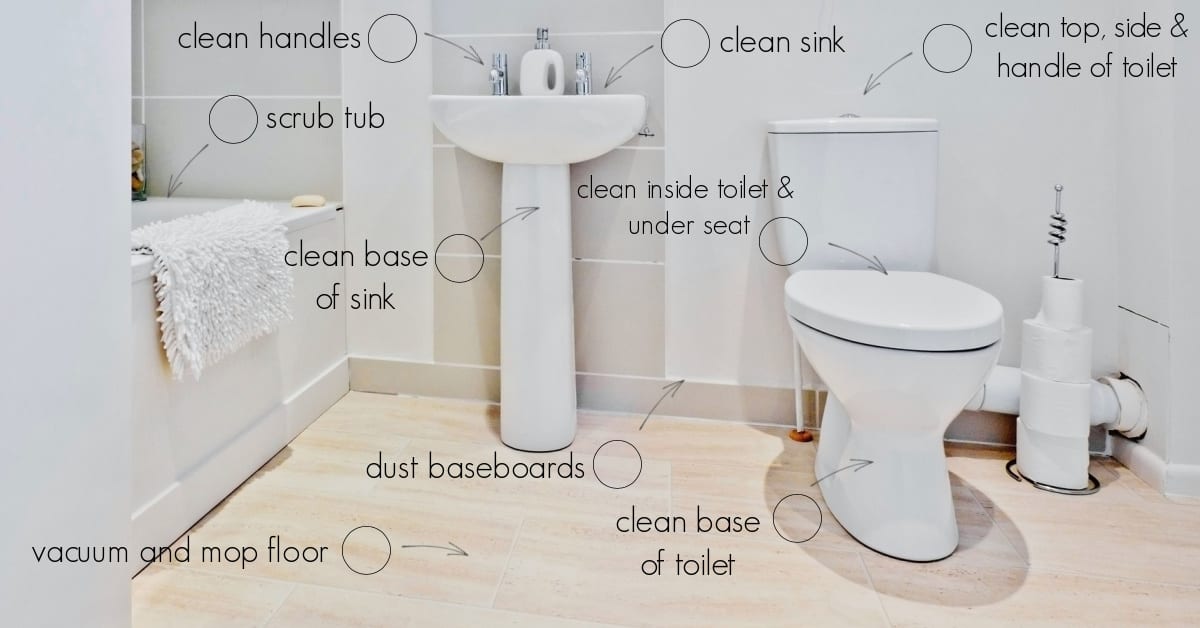
For a simple routine example, see this kids bathroom checklist.
- Wipe down sink and counter after morning routines
- Squeegee shower walls and doors after use
- Empty wastebaskets when full
- Replace towels every few days or when soiled
- Perform deep cleaning weekly with appropriate products
Weekly deep cleaning should address areas that daily maintenance might miss. Clean and disinfect toilet bowls, scrub shower and tub surfaces, mop floors with appropriate cleaners, and wash bath mats and shower curtains. Use child-safe cleaning products or natural alternatives like vinegar and baking soda when children help with cleaning tasks.
| Cleaning Task | Frequency | Child Participation |
|---|---|---|
| Wipe surfaces | Daily | Ages 4+ |
| Empty trash | As needed | Ages 3+ |
| Organize toys | After each use | Ages 2+ |
| Deep clean | Weekly | Ages 8+ (supervised) |
| Replace towels | Every 3-4 days | Ages 6+ |
Involve children in age-appropriate cleaning tasks to build responsibility and life skills. Toddlers can put away bath toys, while school-age children can wipe down surfaces and organize their belongings. Always supervise when children use cleaning products, even natural ones, and teach them to never mix different cleaning chemicals.
Creating Fun and Functional Bathroom Spaces
Transform your bathroom into an engaging space that children enjoy using while maintaining functionality for the entire family. Balance playful elements with practical needs to create an environment that encourages good hygiene habits and independence.
Make routines enjoyable by integrating them into a consistent morning structure: Morning Routines for Kids Made Fun and Easy.
Color schemes and themes can make bathrooms more appealing to children without overwhelming the space. Choose washable paint in colors that hide minor stains and fingerprints. Consider removable wall decals or artwork that can evolve with your children’s interests and ages.
- Use shower curtains with fun patterns or educational themes
- Install colorful but functional storage solutions
- Add soft lighting options for nighttime bathroom visits
- Include a small mirror at child height for independence
Storage solutions should combine functionality with visual appeal. Use clear containers so children can easily identify contents, label everything with both words and pictures, and choose storage that children can access safely. Wall-mounted organizers keep items off counters while remaining within reach.
Bath time accessories can transform routine hygiene into enjoyable experiences. Provide a variety of bath toys that promote learning and creativity while ensuring they’re easy to clean and store. Rotate toys regularly to maintain interest and prevent mold growth from prolonged water exposure.
| Functional Element | Fun Addition | Age Range |
|---|---|---|
| Step stool | Animal-shaped design | 2-8 years |
| Towel hooks | Colorful animal shapes | All ages |
| Soap dispenser | Automatic with lights | 3+ years |
| Bath mat | Color-changing material | All ages |
| Toothbrush holder | Character themes | 2+ years |
Bathroom Safety Rules for Different Ages
Establishing clear, age-appropriate safety rules helps children understand expectations and develops their decision-making skills. Rules should be simple, consistent, and regularly reinforced through practice and discussion.
For toddlers and preschoolers, focus on fundamental safety concepts they can understand and remember. Use simple language and repeat rules frequently. Visual reminders like picture charts can help reinforce important safety messages when verbal reminders aren’t enough.
- DO: Always ask for help before getting in or out of the bathtub
- DON’T: Stand up in the bathtub or shower
- DO: Sit down on the toilet properly
- DON’T: Play with or drink water from the toilet
- DO: Tell an adult if you see water on the floor
- DON’T: Touch electrical outlets or appliances with wet hands
School-age children can understand more complex safety concepts and take greater responsibility for their actions. Discuss the reasoning behind safety rules to help them make good decisions independently. Encourage them to identify potential hazards and think through solutions.
Emergency procedures should be age-appropriate and practiced regularly. Teach children how to call for help, what to do if they slip or fall, and how to handle minor injuries. Ensure they know where first aid supplies are located and how to access emergency contacts.
The bathroom serves as an important space for teaching children independence, responsibility, and self-care skills. By implementing comprehensive safety measures, maintaining cleanliness, and creating an engaging environment, parents can foster positive associations with personal hygiene while protecting their children from harm. Remember that supervision requirements and safety measures will evolve as children grow, requiring regular reassessment and adjustments to maintain an optimal bathroom environment for your family’s changing needs.
Frequently Asked Questions
To learn how to measure waist for men, start by standing straight and finding the narrowest part of your torso, usually above the navel and below the ribcage. Use a flexible tape measure to wrap around this area snugly but not tightly, ensuring it’s level all around. Exhale naturally before taking the measurement for the most accurate result in inches or centimeters.
When figuring out how to measure waist men, locate the waist at the midpoint between the bottom of your ribs and the top of your hips, often around the belly button level. Avoid measuring at the hips or where pants sit, as this can lead to incorrect sizing. This spot ensures consistency for fitness tracking or clothing fits.
For how to measure waist men effectively, you’ll need a soft, flexible measuring tape, like those used for sewing, to get precise readings. A mirror can help ensure the tape is level, and standing in front of one makes the process easier. Avoid using string or rigid rulers, as they won’t conform to your body’s curves accurately.
When learning how to measure waist men, it’s best to measure directly on bare skin for the most accurate results, especially for health or fitness purposes. If measuring for clothing, you can do it over a thin layer like a shirt, but subtract about half an inch to account for fabric. Always ensure the tape is not compressed by clothing for consistency.
Understanding how to measure waist men is key to assessing health; a healthy waist size for most men is under 40 inches to reduce risks of conditions like heart disease. This can vary based on height, ethnicity, and overall body composition, so consult a doctor for personalized advice. Regular measurements help track changes and maintain wellness.