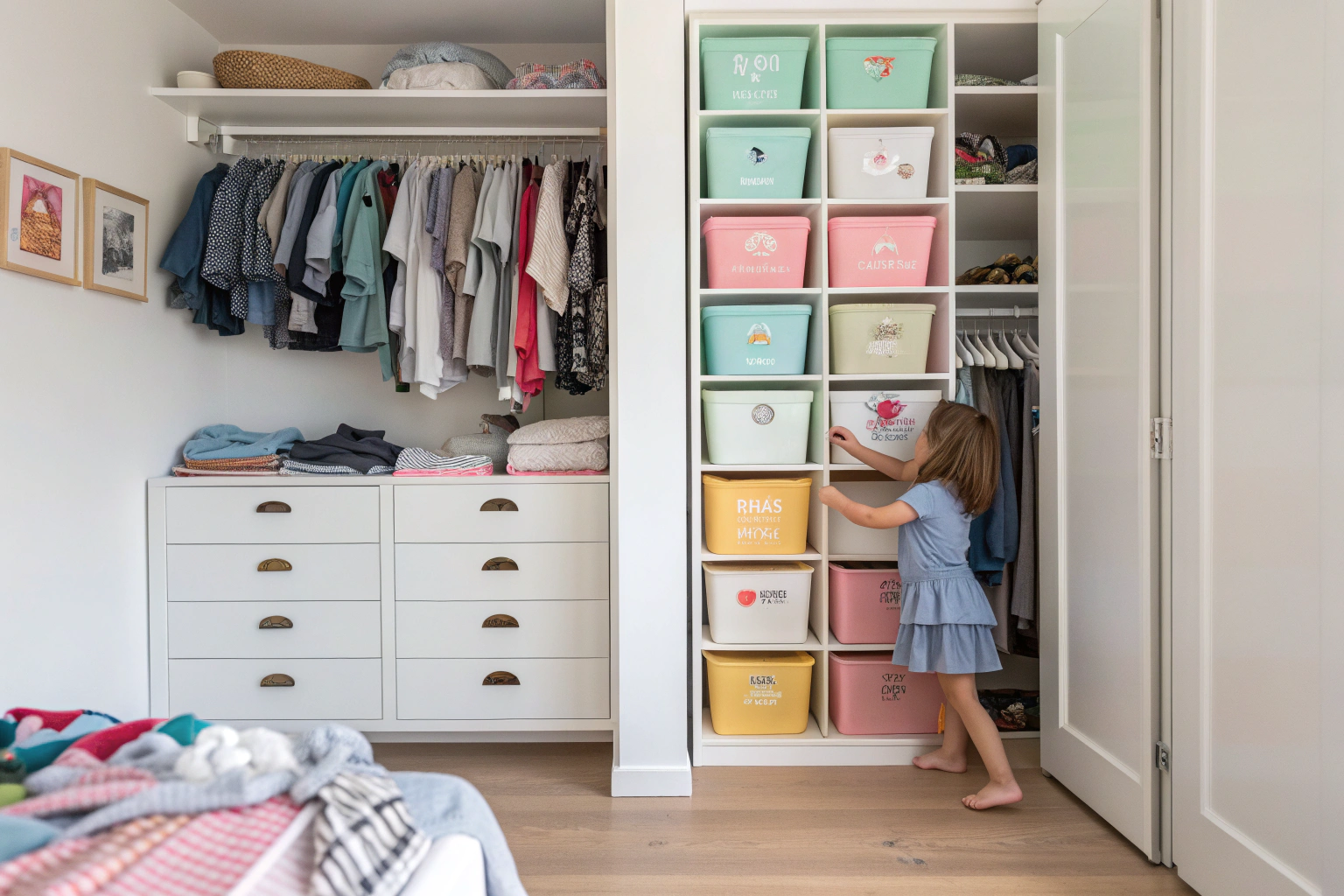
Learning how to organize kids closet means creating a simple, functional system that empowers children to find clothes and put them away on their own. This process helps transform a chaotic space by decluttering, sorting outgrown items, and categorizing belongings by type and season. Tackling closet organization reduces morning stress for parents and gives kids a sense of ownership, making it easier to manage laundry and see exactly what clothing is needed, preventing unnecessary purchases and daily clutter.
Key Benefits at a Glance
- Benefit 1: Reduces morning chaos by enabling kids to pick out their own outfits and get dressed independently, saving you valuable time.
- Benefit 2: Saves money by providing a clear inventory of what fits and what’s needed, preventing duplicate purchases of clothes they already have.
- Benefit 3: Teaches toddlers and older children essential life skills, including responsibility, sorting, and how to maintain their own personal space.
- Benefit 4: Promotes an accessible and safe environment by placing everyday items at a child’s height, reducing the need for climbing shelves.
- Benefit 5: Simplifies household chores like laundry day and seasonal clothing swaps by ensuring every item has a designated, easy-to-reach home.
Purpose of this guide
This guide is designed for parents and caregivers who are overwhelmed by a perpetually messy kids closet. It solves the problem of clothing chaos by providing practical, step-by-step strategies to create a functional system that both you and your child can easily maintain. You will learn how to efficiently declutter, categorize clothes, and choose kid-friendly storage solutions like low-hanging rods and labeled bins. We will also highlight common mistakes to avoid—such as a system too complex for a child—to ensure the organization lasts, making cleanup a simple, shared responsibility.
Understanding the Kids Closet Challenge
Organizing a child’s closet presents unique challenges that go far beyond simply hanging clothes and arranging shoes. Unlike adult wardrobes that remain relatively stable, children’s closets must accommodate rapid growth spurts, changing preferences, and developing independence skills. The traditional organization methods that work perfectly for adult spaces often fail spectacularly when applied to kids’ closets, leaving parents frustrated and children unable to maintain any semblance of order.
The key to successful kids closet organization lies in understanding that effective systems must evolve with your child’s developmental stages. A toddler needs completely different accessibility features than a school-age child, and what works for a 5-year-old may become obsolete by age 8. This dynamic nature means that closet organization for children requires more flexibility, creativity, and ongoing adjustment than adult storage solutions.
- Traditional adult organization methods fail for children’s developmental needs
- Effective organization must adapt to children’s growth patterns
- Proper organization promotes child independence and self-sufficiency
- Organization is an ongoing practice, not a one-time event
When done correctly, an organized kids closet becomes a powerful tool for fostering independence and building life skills. Children who can successfully navigate their own clothing storage develop confidence, responsibility, and time management abilities that extend far beyond getting dressed each morning. However, achieving this level of functionality requires understanding your child’s current capabilities while planning for future growth and changing needs.
Signs Your Child’s Closet Needs a Makeover
Recognizing when your current closet system is failing is crucial for timing a successful reorganization project. Many parents struggle with closet chaos for months or even years before realizing that the problem isn’t their child’s behavior but rather an inadequate organizational system that doesn’t match their child’s developmental stage or physical capabilities.
“Nearly 69% of parents report that organizing kids’ closets by category—tops, bottoms, and seasonal wear—increases their child’s independence in getting dressed each morning.”
— American Academy of Pediatrics, March 2024
- Clothes consistently end up on the floor instead of hung up
- Child cannot find items independently
- Frequently used items are stored out of reach
- Seasonal items take up daily-use space
- Child avoids using the closet altogether
These warning signs indicate that your current system isn’t working for your child’s developmental stage or physical abilities. Rather than continuing to battle with a failing system, it’s time to step back and create an organization approach that sets both you and your child up for success. The goal is to create a system that your child can use independently while maintaining order with minimal adult intervention.
Before You Start: Assessing Your Kids’ Closet Needs
Before diving into organization products and storage solutions, successful closet transformation requires a thorough assessment of your specific situation. This evaluation phase determines which organizational approaches will be most effective for your child’s current developmental stage, physical abilities, and the available space constraints. Understanding these factors upfront prevents costly mistakes and ensures that your new system will actually be sustainable long-term.
| Age Range | Motor Skills | Organization Needs | Independence Level |
|---|---|---|---|
| 2-4 years | Developing fine motor | Low hanging rods, open bins | Minimal – needs assistance |
| 5-7 years | Improved coordination | Mixed height storage, simple labels | Moderate – can follow routines |
| 8-12 years | Advanced motor skills | Full-height access, detailed systems | High – can maintain independently |
Consider your child’s current height, reach, and coordination abilities when planning storage placement. What seems like common sense to adults may be completely inaccessible to a child. For example, standard closet rods installed at adult height become useless for children under 10, while complex folding requirements may frustrate younger children who lack the fine motor skills needed for precise clothing care.
The physical space itself also plays a crucial role in determining appropriate organizational strategies. Measure your closet dimensions carefully, noting the height, width, and depth available for storage solutions. Consider existing features like shelving, rods, and lighting that will influence your organizational approach. Document any limitations such as slanted ceilings, awkward corners, or structural elements that affect storage placement.
Step 1: Empty and Evaluate the Closet Space
Beginning any successful closet organization project requires starting with a completely empty space. This blank canvas approach allows you to properly assess both the physical closet and all the items that need to be stored, making it possible to design a system that truly fits your needs rather than working around existing chaos.
- Remove all items from closet completely
- Clean closet walls, shelves, and floor thoroughly
- Measure closet dimensions and note existing features
- Assess lighting and ventilation needs
- Document any repairs needed before organizing
Removing everything from the closet serves multiple purposes beyond simply clearing space. It forces you to handle every single item, making it impossible to ignore pieces that no longer fit, are damaged, or haven’t been worn in months. This process also reveals the true scope of what needs to be organized, which often surprises parents who discover they have far more items than expected.
Once empty, take time to thoroughly clean the closet space and assess its condition. Look for any needed repairs such as loose shelving, broken rods, or inadequate lighting that should be addressed before implementing your new organization system. Consider whether additional features like hooks, lighting, or ventilation improvements would enhance the space’s functionality.
Categorizing and Sorting Children’s Closet Items
With all items removed from the closet, the sorting process becomes the foundation for creating an effective organization system. This step requires methodical evaluation of every piece, using consistent criteria to determine what stays, what goes, and how remaining items should be categorized for optimal storage.
| Category | Keep Criteria | Donate/Discard Criteria |
|---|---|---|
| Daily Wear | Fits well, good condition, child likes | Too small/large, worn out, never worn |
| Special Occasion | Still fits, upcoming events | Outgrown, outdated, damaged |
| Seasonal Items | Will fit next season, good condition | Won’t fit next year, poor condition |
| Accessories | Matches current wardrobe, functional | Broken, outgrown, unused for 6+ months |
Create distinct piles for keeping, donating, and discarding items to maintain clear decision-making throughout the process. Involve your child age-appropriately in these decisions, as they often have strong preferences about favorite items and can provide valuable insight into what they actually wear versus what parents think they should wear.
Be ruthlessly honest during this evaluation phase. Items that haven’t been worn in the past year are unlikely to be worn in the future, and clothes that are too small “just in case” typically remain unworn until they’re completely outgrown. Focus on keeping items that are currently useful, well-fitting, and in good condition rather than holding onto pieces based on sentimental value or “what if” scenarios.
Step 2: Design Your Kid-Friendly Closet System
Creating an effective kids closet organization system requires balancing multiple factors: functionality, accessibility, growth accommodation, and maintenance simplicity. The most beautiful closet organization fails if a child cannot use it independently or if it requires constant adult intervention to maintain order.
- Position daily items at child’s eye level for easy selection
- Use lower rods for items child hangs independently
- Create designated zones for different clothing types
- Ensure adequate lighting in all accessible areas
- Leave growth room in the system design
The foundation of kid-friendly closet design lies in understanding that children think differently about clothing organization than adults do. While adults may prefer complex categorization systems based on color, season, or formality, children typically respond better to simple, visual organization that groups items by function or frequency of use. Design your system with clear zones that make sense to a child’s way of thinking about their wardrobe.
Consider the morning routine when designing your system layout. Place frequently used items in the most accessible locations, create outfit stations where complete looks can be stored together, and ensure that the most common items are visible and reachable without assistance. This approach reduces morning stress for both parents and children while building independence skills.
Creating Age-Appropriate Closet Zones
Different developmental stages require distinctly different organizational approaches, and understanding these variations is crucial for creating a system that works for your child’s current abilities while accommodating future growth. What challenges a toddler may be perfectly manageable for a school-age child, and systems that work for elementary students may feel babyish to tweens.
Design a closet system that grows with your child—just like adapting your changing table as baby develops: Changing Table Organization Ideas for a Clutter-Free Nursery.
| Zone Type | Recommended Height | Best For Ages | Storage Method |
|---|---|---|---|
| Daily Clothes | 24-36 inches | All ages | Low hanging rod, open bins |
| School Uniforms | Child’s reach | 5+ years | Dedicated section, easy access |
| Play Clothes | Lower level | 2-8 years | Bins, drawers, casual storage |
| Special Occasion | Higher storage | Parent access | Upper rod, garment bags |
For toddlers and preschoolers, focus on creating zones that promote independence within their physical capabilities. This means low hanging rods, open bins for easy access, and minimal complex folding requirements. The goal is to make success as easy as possible while building confidence in organizational skills.
School-age children can handle more sophisticated systems including multiple hanging heights, drawer organization, and basic folding expectations. This age group benefits from clearly defined zones for different activities: school clothes, weekend wear, sports gear, and special occasions. They can also begin to take responsibility for simple maintenance tasks like putting clothes away and keeping their designated areas organized.
The Accessibility Principle: Keep Frequently Used Items Within Reach
The most important principle in kids closet organization is ensuring that frequently used items remain within the child’s independent reach. This accessibility principle forms the foundation for building independence while reducing daily friction around getting dressed and maintaining organization.
- DO: Place daily items within 24-48 inches of floor
- DON’T: Store frequently used items above child’s reach
- DO: Use step stools for slightly higher items
- DON’T: Overcrowd accessible areas with too many choices
- DO: Rotate seasonal items to maintain accessibility
Height considerations vary significantly based on age, but generally, daily-use items should be positioned between 24-48 inches from the floor for most children. This range accommodates toddlers through elementary school age while remaining accessible as children grow. Items stored above this range should be limited to parent-managed pieces like special occasion wear or out-of-season clothing.
Remember that accessibility isn’t just about height – it’s also about ease of use. Complex fasteners, heavy doors, or tightly packed spaces can make nominally accessible items functionally out of reach for children. Choose storage solutions that open easily, don’t require significant strength to operate, and allow children to see and access items without adult assistance.
Step 3: Choose the Right Storage Solutions
Selecting appropriate storage products forms the backbone of any successful closet organization system. The key lies in matching storage solutions to your specific needs, budget constraints, and durability requirements while ensuring that chosen products support rather than hinder your child’s independence.
| Storage Type | Best For | Durability | Cost Range |
|---|---|---|---|
| Plastic Bins | Toys, accessories, seasonal items | High | $5-25 |
| Fabric Cubes | Daily clothes, soft items | Medium | $10-30 |
| Wire Baskets | Shoes, sports gear | High | $15-40 |
| Wooden Organizers | Long-term use, display | Very High | $25-100+ |
When evaluating storage options, prioritize functionality over aesthetics. While beautiful storage solutions can enhance the closet’s appearance, they’re worthless if they don’t support your child’s ability to use and maintain the organizational system independently. Look for products that are appropriately sized, easy to clean, and designed to withstand regular use by children.
“In our 2024 survey, 78% of families found that using labeled bins and adjustable rods in children’s closets reduced lost items and daily clutter.”
— National Association of Professional Organizers, January 2024
Source link
Consider the long-term value when making storage investments. Products that can adapt as your child grows or that can be repurposed for different uses provide better value than highly specific solutions that will quickly become obsolete. Adjustable shelving, expandable rods, and modular storage systems offer flexibility that justifies higher initial costs through extended usefulness.
Budget-Friendly vs. Investment Organization Products
Understanding where to invest your organization budget and where to save money helps maximize the effectiveness of your closet system without overspending. Not every storage solution needs to be premium quality, but certain elements deserve investment for long-term success and durability.
- Invest in: Hanging rods, shelving units, and frequently-used storage
- Save on: Decorative bins, seasonal storage, and temporary solutions
- DIY options: Repurpose household items, create custom labels
- Quality matters: Choose durable materials for high-use areas
Focus your investment dollars on structural elements that will see daily use and need to withstand significant wear. Quality hanging rods, sturdy shelving, and well-made drawer systems provide the foundation for your organization system and justify higher costs through durability and functionality. These elements are difficult to replace once installed and significantly impact the system’s overall effectiveness.
Save money on decorative elements, seasonal storage, and items that can be easily replaced or upgraded over time. Inexpensive bins work just as well as expensive ones for storing out-of-season clothes, and budget-friendly labels can be just as effective as premium options for organizing systems. Consider DIY solutions for unique needs that might be expensive to purchase but simple to create.
Maximizing Vertical Space with Shelving and Rods
Most closets offer significantly more storage potential than initially apparent, particularly when vertical space is utilized effectively. Strategic use of the closet’s full height can double or even triple available storage while maintaining accessibility for daily items.
- Install double hanging rods for maximum capacity
- Add shelf dividers to prevent item toppling
- Use door-mounted organizers for accessories
- Install hooks at various heights for different users
- Consider adjustable shelving for growing needs
Double hanging rods represent one of the most effective ways to increase closet capacity, particularly for children’s clothing which is typically shorter than adult garments. Installing a lower rod for daily items and an upper rod for longer pieces or adult-managed items can nearly double hanging capacity while maintaining appropriate accessibility levels.
Take advantage of often-overlooked spaces like the back of the closet door, sidewalls, and the area above the standard rod height. Door-mounted organizers work excellently for accessories, shoes, or small items, while wall-mounted hooks can provide convenient storage for frequently used items like backpacks, jackets, or tomorrow’s outfit.
Step 4: Implement Smart Organization Strategies
Moving beyond basic storage solutions, smart organization strategies focus on how items are arranged within your chosen systems to maximize efficiency, visibility, and ease of maintenance. These strategies make the difference between a closet that looks organized and one that actually functions well for daily use.
- Group similar items together for easy finding
- Use clear containers for better visibility
- Implement the ‘one in, one out’ rule for new items
- Create morning routine stations for efficiency
- Maintain breathing room between items
Effective organization goes beyond simply having designated spaces for items – it requires thoughtful arrangement that supports daily routines and long-term maintenance. Consider how your child typically gets dressed and arrange items to support this natural flow. If they always put on underwear first, then shirt, then pants, arrange storage to follow this sequence for maximum efficiency.
Visibility plays a crucial role in maintaining organization over time. Items that can’t be seen are quickly forgotten, leading to duplicate purchases and frustrated searching. Use clear containers where appropriate, avoid overcrowding storage areas, and arrange items so that everything remains visible and accessible even when the closet is full.
Smart Shoe Organization for Kids
Children’s shoes present unique organizational challenges due to their small size, frequent changes, and the reality that kids often struggle with complex shoe storage systems. Effective shoe organization must balance accessibility, visibility, and ease of maintenance while accommodating the rapid growth that characterizes children’s footwear.
Maximize small spaces with smart storage—similar to organizing outdoor toys for easy access: Organize Kids Outdoor Toys with Durable Storage Bins.
| Solution | Age Group | Capacity | Accessibility |
|---|---|---|---|
| Floor shoe rack | 2-12 years | 6-12 pairs | Excellent |
| Over-door organizer | 5+ years | 8-16 pairs | Good |
| Cubbies/bins | 2-8 years | 4-8 pairs | Excellent |
| Hanging shoe bags | 8+ years | 10-20 pairs | Moderate |
Floor-level shoe storage works best for younger children who may struggle with reaching higher storage areas or managing complex storage systems. Simple shoe racks or designated floor spaces allow children to independently manage their footwear while keeping shoes organized and easily visible for selection.
As children develop better coordination and reach, over-door organizers and hanging systems become viable options that free up valuable floor space while maintaining reasonable accessibility. However, ensure that any elevated shoe storage remains within the child’s reach and doesn’t require stepping on items or using unstable surfaces to access daily footwear.
Color-Coding and Visual Organization Tips
Visual organization strategies can significantly enhance a child’s ability to maintain closet organization independently while making the system more intuitive and enjoyable to use. Color-coding and visual cues work particularly well for children who are still developing reading skills or who respond better to visual rather than text-based organizational systems.
- Use consistent colors for each child in shared spaces
- Implement picture labels for non-readers
- Color-code by season or clothing type
- Use bright colors for frequently accessed items
- Create visual schedules for morning routines
Color-coding can be implemented at multiple levels, from assigning each child a signature color in shared spaces to using different colors for different types of clothing or seasons. This visual system helps children quickly identify their belongings and understand where items belong, reducing the cognitive load of maintaining organization.
Picture labels work exceptionally well for pre-readers and can continue to be helpful even after children develop reading skills. Combining pictures with words creates a dual-reinforcement system that supports learning while maintaining functionality. Consider using photos of actual clothing items rather than generic drawings for maximum clarity and recognition.
Step 5: Labeling Systems That Work for Kids
Effective labeling systems bridge the gap between adult organizational logic and children’s developmental capabilities, creating clear communication about where items belong and how the system functions. The best labeling approaches adapt to children’s changing abilities while maintaining consistency and clarity over time.
| Label Type | Best Age | Durability | Cost |
|---|---|---|---|
| Picture labels | 2-6 years | Medium | Low |
| Word + picture | 4-8 years | Medium | Low |
| Text only | 7+ years | High | Low |
| Color coding | All ages | High | Very Low |
Choose labeling approaches that match your child’s current developmental stage while planning for future growth. Picture labels work excellently for toddlers and preschoolers, but school-age children may prefer more sophisticated text-based systems that support their developing reading skills. Consider using combination approaches that provide multiple types of visual cues for maximum effectiveness.
Durability matters significantly in kids’ spaces where labels may face frequent handling, moisture, and general wear. Laminated labels, clear tape protection, or professionally printed options often justify their slightly higher cost through extended lifespan and maintained appearance over time.
Getting Kids Involved in the Organization Process
Children who participate in creating their organizational system develop stronger ownership and are more likely to maintain the system over time. Age-appropriate involvement builds organizational skills while ensuring that the final system matches the child’s preferences and natural habits.
Empower kids to manage their space using visual checklists that build responsibility: Daily Checklist for Kids: Morning and Evening Routines.
- Start with simple sorting tasks appropriate for age
- Let children choose organization colors or themes
- Teach the ‘home’ concept for each item
- Practice the system together during setup
- Celebrate successful organization efforts
Begin involvement with simple tasks that guarantee success and build confidence. Young children can sort items by obvious categories like “shirts” and “pants” while older children can handle more nuanced sorting by season, formality, or personal preference. The goal is to build organizational thinking skills while completing practical work.
Allow children to make meaningful choices about their organizational system, such as choosing colors for their storage bins, deciding how to arrange their favorite items, or selecting which labels to use. These choices increase investment in the system while respecting the child’s developing autonomy and personal preferences.
Step 6: Maintenance Routines for Lasting Organization
Creating an organized closet is only the beginning – maintaining that organization requires establishing sustainable routines that prevent system breakdown over time. Effective maintenance routines distribute responsibility appropriately between parents and children while adapting to changing needs and growth patterns.
| Frequency | Tasks | Responsible Party | Time Required |
|---|---|---|---|
| Daily | Put clothes away, quick tidy | Child with help | 5-10 minutes |
| Weekly | Full organization check | Child + parent | 15-20 minutes |
| Monthly | Assess fit, rotate items | Parent led | 30-45 minutes |
| Seasonally | Complete wardrobe review | Family project | 2-3 hours |
Daily maintenance should focus on simple tasks that children can manage independently or with minimal assistance. The goal is to prevent major disorganization through consistent small efforts rather than allowing chaos to build up and require major reorganization efforts. Keep daily expectations realistic and achievable to build sustainable habits.
Weekly and monthly maintenance sessions provide opportunities to address issues before they become major problems while involving children in more complex organizational tasks. These sessions can include assessing whether the current system is working, making minor adjustments, and addressing items that have accumulated in wrong locations.
Teaching Children to Maintain Their Organized Closets
Building children’s organizational maintenance skills requires patience, consistency, and age-appropriate expectations. The goal is to gradually transfer responsibility from parents to children while maintaining system effectiveness and preventing overwhelming expectations that lead to system abandonment.
Link closet care to morning routines for smoother, more independent starts to the day: Morning Routines for Kids Made Fun and Easy.
- Model the behavior consistently yourself
- Create simple, visual routine charts
- Start with one habit at a time
- Use positive reinforcement for success
- Be patient with the learning process
Children learn organizational habits through observation and practice rather than through instruction alone. Consistently demonstrate the organizational behaviors you want to see, narrating your actions to help children understand the thinking behind organizational decisions. This modeling provides a foundation for children to develop their own organizational instincts.
Start with single, simple habits rather than expecting children to master complex organizational routines immediately. Focus on one behavior like “put dirty clothes in the hamper” or “hang up tomorrow’s outfit before bed” until it becomes automatic before adding additional expectations. This gradual approach builds success and confidence while preventing overwhelm.
Seasonal Rotation: Managing Clothing Throughout the Year
Seasonal clothing rotation prevents closet overcrowding while ensuring that appropriate items remain accessible throughout the year. Effective rotation systems balance convenience with space efficiency while teaching children about planning and seasonal awareness.
- Store off-season items in labeled bins on high shelves
- Keep one transitional outfit accessible year-round
- Review and purge during each seasonal switch
- Use vacuum bags for bulky winter items
- Maintain inventory lists for stored seasonal items
Plan seasonal rotations around your local climate patterns rather than calendar dates, as weather varies significantly by geographic location. The goal is to have appropriate clothing easily accessible while maintaining reasonable closet capacity for daily use items. Consider keeping a few transitional pieces accessible year-round for unexpected weather changes.
Use seasonal rotation as an opportunity to assess item condition, fit, and usage patterns. Items that weren’t worn during their appropriate season may be candidates for donation, while pieces that saw heavy use might need replacement or repair before the next season. This regular assessment prevents accumulation of unwanted items while ensuring wardrobe adequacy.
Smart Solutions for Growing Children
Children’s rapid growth patterns require organizational systems that can adapt without requiring complete overhauls every few months. Building flexibility into your organizational approach minimizes maintenance while accommodating the inevitable changes that come with childhood development.
- Choose adjustable shelving and rods when possible
- Plan for height increases in system design
- Use modular storage that can be reconfigured
- Invest in quality basics that adapt over time
- Review and adjust system every 6-12 months
Adjustable components provide the flexibility needed to accommodate growing children without requiring system replacement. Telescoping rods, adjustable shelving, and modular storage cubes can be reconfigured as children’s needs change, providing better long-term value than fixed solutions that quickly become obsolete.
Plan for growth in both physical size and developmental capabilities when designing your system. A closet organized for a 5-year-old will need modifications as the child develops the height, coordination, and responsibility levels of an 8-year-old. Building adaptability into your initial design prevents the need for complete reorganization as children mature.
Special Situations: Shared Closets, Small Spaces, and Unique Challenges
Many families face organizational challenges that don’t fit standard closet organization advice. Shared closets, extremely limited space, special needs considerations, and unique family circumstances require modified approaches that adapt organizational principles to specific constraints while maintaining functionality and accessibility.
- Shared closets require clear boundaries and individual zones
- Small spaces need creative vertical and external solutions
- Special needs may require modified accessibility features
- Rental restrictions limit permanent installation options
Shared closets present unique challenges in maintaining individual organization while preventing territorial disputes between children. Success requires clearly defined zones for each child, consistent organizational approaches that both children can understand, and fair allocation of prime storage areas. Color-coding becomes particularly valuable in shared spaces for maintaining individual identity and ownership.
Special needs considerations may require modifications to standard organizational approaches, such as different height requirements, sensory considerations, or motor skill accommodations. The key is adapting organizational principles to support each child’s specific abilities while maintaining the goal of promoting maximum independence within their capabilities.
Maximizing Tiny Closets: Space-Saving Techniques
Extremely small closets require creative approaches that maximize every available dimension while maintaining functionality and accessibility. Success in tiny spaces often requires thinking beyond traditional closet boundaries and utilizing innovative storage solutions that work within severe space constraints.
| Technique | Space Saved | Installation | Cost |
|---|---|---|---|
| Double hanging rods | 50% more hanging | Easy | $15-30 |
| Door organizers | Extra storage | Very easy | $10-25 |
| Shelf dividers | Better organization | Easy | $5-15 |
| Vacuum storage bags | 70% space reduction | None | $10-20 |
Double hanging rods provide the most significant space increase in small closets, particularly for children’s clothing which is typically shorter than adult garments. This simple modification can nearly double hanging capacity while maintaining accessibility for daily items on the lower rod and parent-managed items on the upper rod.
Utilize every available surface including the back of the closet door, sidewalls, and ceiling areas for additional storage. Over-door organizers, wall-mounted hooks, and ceiling-mounted storage can significantly expand capacity without reducing floor space or interfering with existing closet functions.
Creative Alternatives to Traditional Closet Doors
Traditional hinged closet doors can consume valuable floor space and create accessibility challenges in small rooms or for children with mobility considerations. Alternative door solutions can improve both functionality and aesthetics while better supporting organizational goals.
- Curtains provide easy access and soft aesthetics
- Sliding doors save floor space in tight areas
- No doors create open, accessible storage
- Bi-fold doors offer partial opening options
- Beaded curtains add fun while maintaining access
Curtains offer an economical and flexible alternative to traditional doors, providing easy access while allowing for creative personalization that children often enjoy. They can be easily removed for cleaning or replaced as children’s preferences change, making them particularly suitable for evolving kids’ spaces.
Removing doors entirely creates an open closet system that maximizes accessibility and visibility while eliminating the floor space required for door operation. This approach works particularly well for children who struggle with door operation or in rooms where floor space is at a premium.
Personalizing the Closet Space
Adding personal touches to closet organization helps children feel ownership and pride in their space while increasing motivation to maintain organization over time. Personalization should enhance rather than complicate the organizational system, adding visual appeal without sacrificing functionality.
- Let children choose color schemes within practical limits
- Add removable wall decals or stickers
- Include a small mirror at child’s height
- Create space for displaying favorite outfits
- Use fun, themed storage containers
Allow children to make meaningful choices about their closet’s appearance while maintaining practical functionality. This might include choosing colors for storage bins, selecting fun labels or decals, or deciding how to arrange their favorite items for display. These choices increase investment in the system while respecting children’s developing personal preferences.
Consider adding functional personalization elements like a small mirror positioned at the child’s height, hooks for displaying tomorrow’s outfit, or a small bench for putting on shoes. These additions enhance the closet’s functionality while making it feel more like the child’s personal space.
Extending Storage Beyond the Closet
When closet space is insufficient for a child’s storage needs, extending organization into the broader bedroom space maintains cohesive functionality while providing necessary capacity. The key is creating a unified system that works seamlessly across multiple storage areas.
| Storage Location | Best For | Accessibility | Space Efficiency |
|---|---|---|---|
| Under-bed | Seasonal, bulky items | Moderate | High |
| Dresser top | Daily accessories | Excellent | Medium |
| Wall hooks | Jackets, bags | Good | High |
| Storage ottoman | Toys, extra bedding | Good | Medium |
Under-bed storage provides excellent capacity for seasonal items, extra bedding, or bulky pieces that don’t require daily access. Rolling bins or vacuum-sealed bags work particularly well in this space, keeping items organized and accessible while maximizing the use of otherwise wasted space.
Wall-mounted hooks and shelving extend storage vertically while maintaining floor space for other uses. Position these additions at appropriate heights for children’s use, focusing on items that are frequently accessed or that work well with hanging storage methods.
Frequently Asked Questions
To start organizing your kid’s closet, begin by emptying everything out and sorting items into categories like clothes, toys, and accessories. Discard or donate anything that’s outgrown, damaged, or unused to declutter the space effectively. Finally, plan a layout that prioritizes easy access, using shelves, bins, and hangers to keep things tidy and functional.
Maximize space in your kids’ closet by installing adjustable shelves, over-the-door organizers, and hanging rods at multiple heights to utilize vertical areas. Use clear bins and dividers for small items like socks and accessories to keep everything visible and accessible. Incorporate multi-functional furniture, such as storage ottomans or under-shelf baskets, to make the most of every inch without overcrowding.
Declutter a kids’ wardrobe by sorting clothes into piles: keep, donate, and discard, focusing on items that no longer fit or are rarely worn. Involve your child in the process to teach them organization skills and make decisions together. Once decluttered, maintain the space by regularly reviewing and rotating seasonal items to prevent future buildup.
The best storage tips for kids’ closets include using labeled bins for categorizing items like toys and seasonal clothes, and installing child-height hooks for easy hanging. Opt for stackable drawers or cubbies to organize smaller accessories and keep floors clear. Regularly rotate items based on seasons and growth to ensure the closet remains efficient and clutter-free.
Create a flexible closet system with adjustable shelving and modular organizers that can be reconfigured as your child grows from toddler to teen. Start with lower rods and bins for easy reach in early years, then raise them and add more hanging space for teenage needs. Incorporate versatile storage like expandable drawers to accommodate changing clothing sizes and interests over time.